
From the Lab Bench to the Battlefield: How Haima Therapeutics Is Reimagining Blood Clotting

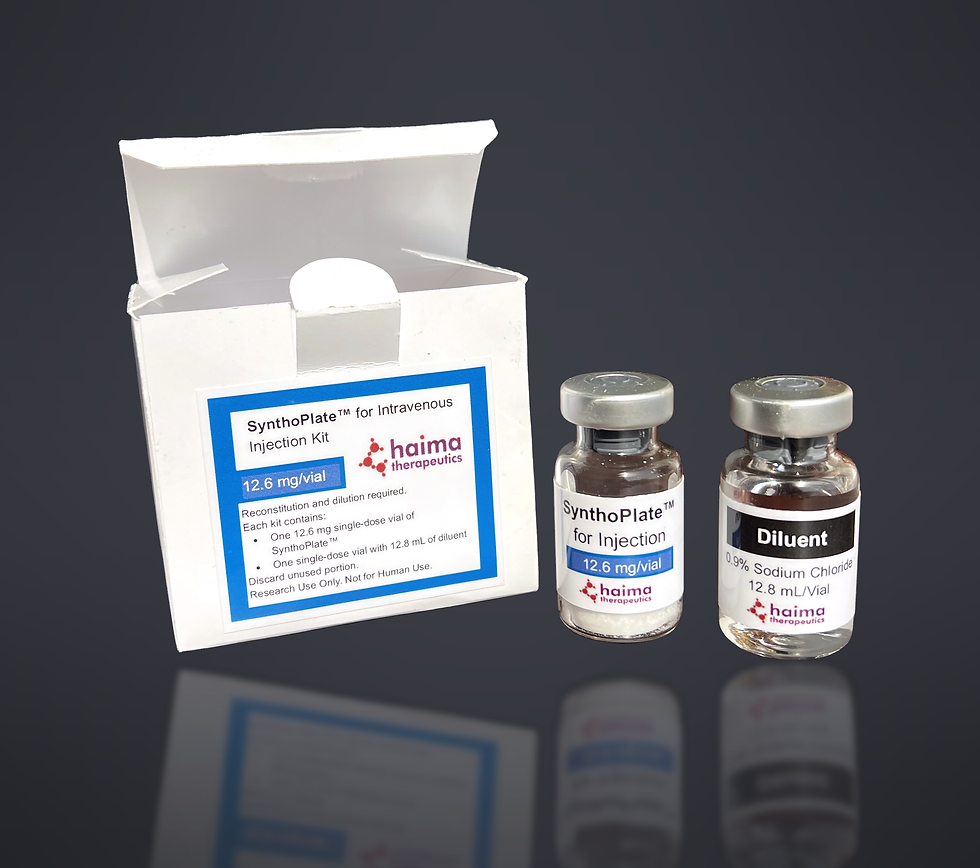
On a laboratory bench in Cleveland sits a small glass vial containing little more than an off-white powder. At first glance, it hardly seems remarkable. Yet after years of research, more than $40 million in competitive non-dilutive funding, and extensive testing across multiple preclinical models, that vial represents a technology that could someday help surgeons control bleeding in the operating room, give military medics a shelf-stable tool for treating traumatic injuries in the field, and ultimately save lives when every second counts.
To Dr. Christa Pawlowski, co-founder and Chief Operating Officer of Haima Therapeutics, it also represents something more personal: a decision made nearly a decade ago not to walk away. As Pawlowski neared the completion of her doctorate in biomedical engineering at Case Western Reserve University, she found herself facing a path familiar to many academic researchers. Finish the dissertation. Publish the work. Move on to the next scientific question. But one project refused to leave her mind.
“I got into biomedical engineering because I wanted to help people,” Pawlowski said. “I wanted to use engineering principles to create new technologies and ultimately help patients.”
Her doctoral research in Dr. Anirban Sen Gupta’s laboratory centered on nanoparticle technologies for vascular medicine. Some projects explored particles designed to dissolve blood clots or deliver therapies to metastatic cancer cells. Another focused on a synthetic platelet technology intended to support the body’s response to severe bleeding. That project began producing unusually promising results. In early mouse studies, a single injection reduced blood loss by approximately 70 percent. Rather than asking what she would study next, Pawlowski began asking a different question.
“What about this?” she recalled. “I want to drive this toward the clinic.”
That question would eventually become Haima Therapeutics.
The Project She Couldn’t Leave Behind
Moving a scientific discovery toward patients required Pawlowski to enter an entirely new world. She understood nanoparticles, vascular biology, and experimental design. Building a company meant learning another language, one that included intellectual property, licensing, customer discovery, regulatory strategy, manufacturing, fundraising, and commercialization.
Pawlowski and Sen Gupta began asking questions that extended far beyond whether the technology worked in an animal model. Who would use it? What clinical problem should it address first? What would regulators need to see? How could a university invention become a therapeutic product manufactured consistently and at scale?
The team pursued translational support through programs including the Wallace H. Coulter Foundation, Case Western Reserve University’s Council to Advance Human Health, the Ohio Third Frontier Technology Validation and Start-up Fund, and Cleveland Clinic’s biotechnology-focused I-Corps program. Those programs supplied essential funding, but they also forced the scientists to examine the technology from new perspectives. It was no longer enough to show that SynthoPlate could reduce bleeding. They had to understand where it belonged in medicine, who needed it most, and whether a viable company could be built around it.
By 2016, Haima Therapeutics had officially formed. The name, derived from the Greek word for blood, reflected the company’s purpose. Its goal was not simply to create another nanoparticle platform. It was to develop technologies capable of improving how severe bleeding is treated.
Before Haima could advance SynthoPlate as a therapeutic, however, it first needed the legal right to develop the university-born invention. Working with Case Western Reserve University’s technology transfer office, the company initially secured an option and later an exclusive license to the foundational intellectual property. The university retained ownership of the academic invention while granting Haima the right to develop and commercialize it.
“The university doesn't want someone to license a technology and then just sit on it,” Pawlowski explained. “The company is expected to use commercially reasonable efforts to move it forward.”
The arrangement created both an opportunity and an obligation. Haima gained access to the technology, but it also assumed responsibility for advancing it through the long and costly process of product development. The company’s intellectual property portfolio has continued to grow alongside the science. Today, it includes licensed patents from Case Western Reserve University and additional patent families developed internally.
It is a familiar transition in biotechnology: a discovery may begin at a university bench, but turning it into a therapeutic requires new infrastructure, new expertise, and years of deliberate translation.
A Different Kind of Customer
Haima’s earliest years were not defined by a massive venture capital round. Instead, they were built largely through competitive grants. The company has received support from organizations including the National Science Foundation, the National Institutes of Health, Ohio-based translational programs, the U.S. Department of Defense (DOD), and DARPA. In total, Haima has secured more than $40 million in non-dilutive funding, supplemented by more than $1 million in private investment.
That funding allowed the company to conduct the extensive research required to move SynthoPlate toward clinical development while preserving more ownership than would have been possible through private capital alone.
But the DOD/DARPA became more than a source of research dollars. It also became an early voice of the customer. For military medicine, uncontrolled hemorrhage remains one of the most urgent challenges in trauma care. Donated blood products can be lifesaving, but they are difficult to transport and maintain outside of established medical facilities. A dependence on donors also creates constant supply shortages.
Platelets are particularly challenging because of their short shelf life and demanding storage requirements. Hospitals may be able to manage those constraints through carefully coordinated blood-bank systems. However, for a medic working far from a trauma center, that is not a possibility.
“We started attending military health conferences and talking to the military,” Pawlowski said. “We wanted to understand what their requirements were.”
Military stakeholders asked questions that would rarely arise in a conventional laboratory. Could the product remain stable for a year? Could it withstand extreme heat? Would it occupy minimal space in a medic’s pack? Could it be prepared quickly under battlefield conditions? Could it be administered without the complex logistics required for donated platelets?
Those conversations helped shape what SynthoPlate needed to become. Rather than developing a fragile liquid product dependent on continuous refrigeration, Haima created a lyophilized, or freeze-dried, formulation. The resulting powder can remain stable for over one year at room temperature and has also been tested after storage at temperatures as high as 40 degrees Celsius, or 104 degrees Fahrenheit, for a year.
Before administration, the powder is mixed with a sterile diluent to produce a ready-to-use therapeutic. During the interview, Pawlowski held up one of the small glass vials. It fit easily in the palm of her hand.
“This is essentially a human dose,” she said.
The DOD/DARPA did not merely support the original scientific idea. Its needs helped transform that idea into a product designed for the environments where conventional platelet supplies are hardest to provide. Funding, in this case, did more than enable innovation, it helped shape it.
Engineering a Better Platelet
If donated platelets already exist, why build a synthetic technology at all? The answer begins with their limitations.
Platelets are fragments of cells that circulate through the bloodstream and play an essential role in stopping bleeding. When a blood vessel is damaged, they adhere to the site of injury, activate, and aggregate with one another to help form the early structure of a clot. But platelets are also remarkably fragile.
Their supply is dependent on human donors. Outside the body, they generally remain usable for only a matter of days, creating persistent challenges for collection, storage, transportation, and inventory management. Maintaining an adequate supply is difficult even within major health systems. In remote locations, military environments, ambulances, or hospitals with limited access to blood products, it can be nearly impossible.
SynthoPlate is designed to support the body’s clotting response without attempting to reproduce every biological function of a natural platelet. It is comprised of a lipid nanoparticle approximately 200 nanometers in diameter, which is roughly one-tenth the size of a platelet. Unlike other lipid nanoparticle therapeutics used primarily to carry another therapy, the therapeutic activity of SynthoPlate comes from the chemistry engineered onto its surface.
“The function of the drug comes from the surface chemistry,” Pawlowski explained.

Polyethylene glycol, or PEG, chains extend from the particle’s surface like flexible arms. Attached to those chains are three engineered peptides, each selected to participate in a specific part of clot formation. One recognizes collagen, another binds von Willebrand factor (vWF), while the third mimics fibrinogen, helping create bridges between the nanoparticle and nearby platelets. Individually, those interactions are limited. Together, they allow SynthoPlate to mimic two of the most important early functions of natural
platelets in clotting: adhesion and aggregation.
Joining the Body’s Natural Response
Under healthy conditions, platelets circulate without adhering to the intact lining of a blood vessel. When the vessel is injured, that protective lining is disrupted. Collagen beneath the surface becomes exposed, and von Willebrand factor helps create molecular attachment points at the damaged site. Natural platelets recognize those signals, adhere to the injury, and begin linking together through interactions involving fibrinogen.
SynthoPlate does not replace that process. Instead, it joins in. The collagen-binding peptide helps anchor the nanoparticle at the damaged vessel wall. The vWF-binding peptide strengthens its localization at the injury. The fibrinogen-mimetic peptide then helps recruit and connect nearby platelets, supporting faster aggregation where bleeding is occurring.
“We’re basically mimicking the adhesion and aggregation function of platelets,” Pawlowski said.
She compared the process to stacking sandbags during a flood. The body’s natural platelets are the existing sandbags. SynthoPlate helps add to the barrier, concentrating clot-forming activity where it is needed and accelerating the response.

This distinction matters because despite the shorthand description of SynthoPlate as a “synthetic platelet,” it is not a complete artificial replacement for donated platelets, nor does it reproduce the many complex biological roles they perform throughout the body. More precisely, Haima describes SynthoPlate as a hemostatic adjunct, designed to mimic selected platelet functions and support the body’s natural clotting response.
From an Elegant Design to a Testable Drug
The underlying concept can be illustrated easily enough, but proving that it can function safely inside a living body has taken years. Before approaching human trials, Haima evaluated SynthoPlate in extensive preclinical studies. These models allowed the company to investigate how the nanoparticles behave under different bleeding conditions, refine the dose, evaluate safety, and compare their performance with existing approaches.
The early mouse result, which shows a roughly 70 percent reduction in blood loss following a single dose, helped demonstrate the technology’s potential. Subsequent studies expanded the evidence base across larger and more complex animal models. That progression is critical in therapeutic development. A technology that performs well in a controlled laboratory experiment must still be manufactured reproducibly, remain stable during storage, behave predictably in circulation, localize to the intended biological site, and demonstrate an acceptable safety profile.
For SynthoPlate, the leap from an academic nanoparticle to a clinical candidate required advances not only in biology, but also in formulation, manufacturing, quality systems, toxicology, and regulatory planning. This is where the apparent simplicity of the vial becomes deceptive. Inside is not merely a powder. It is the culmination of thousands of interconnected decisions involving materials, surface chemistry, particle size, peptide density, stability, dosing, and production; all of which must now meet the exacting standards required before a new therapy can enter the clinic.
Choosing the First Patient
Developing a new therapy is not simply about demonstrating that it works. It also requires deciding where to prove it first. Haima’s long-term ambitions include treating traumatic bleeding, including injuries sustained on the battlefield. Yet the company does not expect to begin clinical efficacy testing in trauma patients.
Its first planned patient population is people undergoing complex surgery. At first, the choice may seem surprising. If SynthoPlate was shaped partly by the needs of military trauma care, why not test it immediately in trauma?
Because trauma is extraordinarily difficult to study. No two injuries are identical. Patients arrive with different levels of blood loss, different wounds, different medical histories, and different amounts of time between injury and treatment. Care may begin in an ambulance, a rural hospital, an emergency department, or a military field setting. Other blood products and interventions may be administered at different times.
Those variables make it harder to determine precisely how much benefit came from an experimental therapy. Clinical trials in trauma can also require thousands of patients to generate clear evidence across a highly heterogeneous population. For a small biotechnology company, beginning there could be scientifically and financially overwhelming.
Surgery offers a more controlled entry point. The procedures occur in established hospital settings. Blood loss can be significant, yet anticipated and measured. The patient population is more consistent. Investigators can carefully track transfusion requirements, laboratory values, safety outcomes, and other indicators of whether SynthoPlate is having the intended effect. That makes surgery a practical setting in which to establish proof of concept while still addressing a major unmet clinical need.
Haima currently plans to begin with a Phase I study in healthy volunteers, using escalating dose groups to assess safety and understand how the drug behaves in humans. If those results support further development, the company expects to move into a Phase II-III studies in patients undergoing surgery associated with high blood loss.
Only after establishing safety and efficacy in a controlled surgical environment would the company be positioned to pursue more complex indications such as trauma. The strategy offers a revealing look at how therapeutic development actually progresses.
Companies do not necessarily begin with the largest or most dramatic clinical need. They begin where the science can be evaluated most clearly, then use that evidence to move toward the harder problem. For Haima, the path to the battlefield will first pass through the operating room.
Funding the Gaps Grants Cannot Cover
Haima’s grant-driven development strategy has allowed it to advance SynthoPlate while limiting shareholder dilution, but non-dilutive funding does not eliminate the need for private capital. This is because grants are typically awarded for defined scientific aims. They may support experiments, personnel, manufacturing development, preclinical studies, or other research activities tied to the funded project.
They do not necessarily cover every cost associated with running and protecting a company. Patent prosecution, corporate operations, business development, and other essential expenses may fall outside the scope of an award. Funding may also arrive in installments tied to milestones rather than appearing as unrestricted cash available for any company need.
That is why Haima, despite securing more than $40 million in non-dilutive support, has also raised private investment and is pursuing additional funding.
The number illustrates an important reality of biotechnology financing. A company can be highly successful at winning grants and still require investor capital to reach the clinic. For Haima, the blended approach has helped preserve flexibility while supporting the costly work required for clinical readiness. It also reflects Pawlowski’s emphasis on choosing partners and opportunities that align with the company rather than accepting capital solely because it is available.
Building With Purpose in Cleveland
Haima’s story is deeply connected to Cleveland. As previously noted, the underlying technology emerged at Case Western Reserve University. The company was formed in the Northeast Ohio region. Its scientific and professional network grew through local institutions, translational programs, advisers, and collaborators.
For an early-stage biotechnology company, Cleveland offers meaningful advantages. Scientific and technical talent are available through the region’s universities, hospitals, research institutes, and healthcare companies. Laboratory space is often more affordable than in coastal biotechnology hubs. Founders can build relationships across institutions that possess deep expertise in medicine, engineering, and commercialization.
But the ecosystem also presents challenges. Pawlowski described a region that can feel fragmented, with resources distributed across organizations that do not always operate as a cohesive network. Private investment dedicated specifically to life sciences remains limited compared with larger biotechnology centers, forcing many companies to look outside Ohio for growth capital. Women building biotechnology companies in the state may also receive less visibility than the scale of their work warrants.

Haima has nevertheless continued to build from Cleveland, drawing on the region’s scientific foundation while navigating its gaps. When Pawlowski reflects on the company’s development, she does not frame the story solely in terms of financing milestones, patents, or corporate titles. Instead, she returns to purpose.
“I think building the company with purpose, and doing what’s right by the technology and yourself,” she said. “There’s been several opportunities that we’ve turned down because it didn’t feel like it was the right fit for the company.”
Those decisions may not always produce the fastest possible path forward. In biotechnology, the fastest path is rarely obvious anyway. What matters is whether each decision moves the technology closer to a meaningful test in patients without compromising what the company was created to accomplish and also continuing to create value for the company.
Looking Toward the Clinic
For nearly a decade, Haima Therapeutics has been building toward a single milestone. Not another grant, patent, or publication, but the moment SynthoPlate moves beyond the laboratory and reaches its first patient. The company is currently completing its IND-enabling work and plans to submit an Investigational New Drug application to the U.S. Food and Drug Administration in 2027. If cleared to proceed, Haima expects to begin its first Phase I clinical trial shortly thereafter.
The initial study will not determine whether SynthoPlate can transform trauma medicine. It will answer the first and most fundamental questions about its safety and behavior in humans. The data from the study will then determine what comes next.
While there will still be uncertainty, reaching the IND stage is itself significant. It means the project Pawlowski refused to leave behind has survived the transition from dissertation research to intellectual property, from intellectual property to company formation, from company formation to product engineering, and from product engineering toward the clinic.
Nearly a decade ago, a graduate student looked at a promising research project and asked whether it could become more than a publication. Today, the answer sits on a laboratory bench in Cleveland, inside a small glass vial. It still looks unassuming, but now it’s closer than ever to the first opportunity to help someone.
Editor’s Note: At the time of this interview, Haima Therapeutics was completing IND-enabling studies and planning to submit an Investigational New Drug application in 2027. Clinical development plans and timelines remain subject to regulatory review and may change.
Key Takeaways
Haima Therapeutics grew out of Christa Pawlowski’s doctoral research at Case Western Reserve University.
Its lead product, SynthoPlate, is a synthetic hemostatic adjunct designed to mimic key platelet functions and support clot formation.
More than $32 million in non-dilutive funding, including Department of Defense support, has helped shape SynthoPlate’s development and battlefield-ready formulation.
Haima is preparing to move SynthoPlate into human clinical trials, beginning with healthy volunteers and later patients undergoing complex spine surgery.
The company’s story shows how academic research can be translated through licensing, product development, regulatory strategy, and clinical planning.
Frequently Asked Questions
What is Haima Therapeutics?
Haima Therapeutics is a Cleveland-based biotechnology company developing technologies for bleeding control and hemostasis.
What is SynthoPlate?
SynthoPlate is Haima Therapeutics’ synthetic hemostatic adjunct. It is designed to mimic selected platelet functions, including adhesion and aggregation, to support the body’s natural clotting response.
Is SynthoPlate a replacement for donated platelets?
No. SynthoPlate is not intended to reproduce all of the biological functions of natural platelets or completely replace donated platelets. Haima describes it as a hemostatic adjunct.
How does SynthoPlate work?
SynthoPlate uses a lipid nanoparticle coated with functional peptides that interact with collagen, von Willebrand factor, and GPIIb/IIIa receptors on activated platelets to help localize and support clot formation at sites of vascular injury.
Why has the Department of Defense supported Haima Therapeutics?
The technology may have potential value in military and trauma settings where donated platelets can be difficult to store and transport. Department of Defense support also helped drive development of a compact, freeze-dried formulation designed for challenging environments.
When will SynthoPlate enter clinical trials?
At the time of the article, Haima was completing IND-enabling work and planning to submit an Investigational New Drug application in early 2027. Clinical timelines remain subject to regulatory review.
Click here to view other Cleveland biotech companies.
Explore other Case Western Reserve University spinout companies.


Comments