
A New Lab for an Old Problem: Cleveland Analytical and the Fight Against Lead

Updated: Jul 27
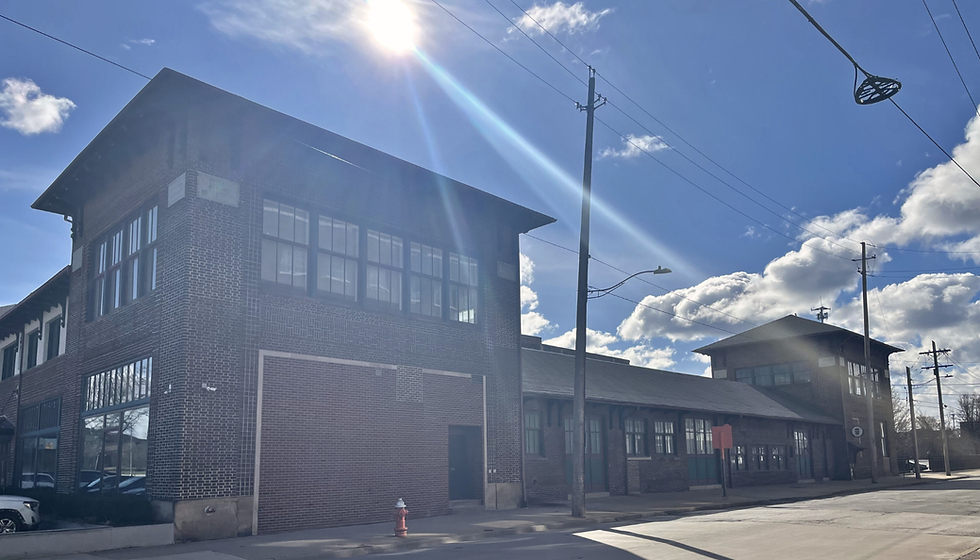
In Cleveland’s Midtown innovation corridor, the renovated Baker Electric Building houses more than 20 local startups. Among them is a small analytical laboratory preparing for a launch years in the making. Cleveland Analytical was founded in 2023 with a mission to help the city of Cleveland address a persistent public health problem: lead contamination in older housing.
To hear more about this story, I had the opportunity to tour the Baker building and meet with Dr. Michael Fricke, Cleveland Analytical’s Chief Scientific Officer.
The Problem
Older cities like Cleveland have large numbers of pre-1978 homes, when lead paint was still common. According to the City of Cleveland, 80% of Cleveland and Cuyahoga county homes were built before 19801, meaning there is a high likelihood they are contaminated with lead. When paint deteriorates or renovations occur, lead dust can accumulate, especially around windowsills, floors, and door frames.
Children are especially susceptible to lead poisoning and Cleveland consistently reports some of the highest rates of childhood lead exposure in the nation. The Francis Payne Bolton School of Nursing at Case Western Reserve University states that “Cleveland has an average of 12 to 13 percent of children with elevated lead levels, with some neighborhoods seeing rates as high as 25 percent.”2
The City of Cleveland knows that lead is a problem and has taken steps to address the issue. One approach has been requiring landlords to certify that their rental properties are free of lead hazards.
Akbar Tyler, a home inspector in Cleveland, deals with lead inspections on a regular basis. Home inspectors are part of the boots-on-the-ground effort to certify that apartments and homes are lead-free. Through this work, Mr. Tyler realized that Cleveland lacked a local analytical laboratory capable of processing and testing lead samples. The samples collected by home inspectors were being sent to Detroit or Philadelphia, which slows down turnaround time. This in turn leads to people being in contact with lead longer.
Along with being a home inspector, Mr. Tyler is a lead risk assessor and trains new home inspectors. He was previously the Director of Training and Healthy Home for Environmental Health Watch and brings that passion for safety to Cleveland Analytical. His long-standing friendship with Dr. Michael Fricke and Ozimba Anyangwe, MBA, grew into a realization that together, the three of them could be part of the solution to Cleveland’s lead problem. That’s how Cleveland Analytical was born.
The Partnership
Akbar Tyler will tie Cleveland Analytical directly to the customers who need them the most with his home inspection background. He also has many years of experience with starting new companies and will serve as the Chief Executive Officer for Cleveland Analytical.
Dr. Michael Fricke brings over 30 years of analytical chemistry experience. Before launching Cleveland Analytical, he worked in the pharmaceutical industry and he also serves as Chair of the Akron Section of the American Chemical Society. He brings that experience with regulated lab environments to build a testing facility focused on upholding the highest standards. Dr. Fricke will use the knowledge built from years of analytical testing to serve as the Chief Scientific Officer of Cleveland Analytical.
Ozimba Anyangwe comes to Cleveland Analytical from a long held position at the Cleveland Water Department. His familiarity with EPA methods and quality control will serve him well in his role as the Chief Quality Officer.
Together, the three founders aim to solve the regional lead testing bottleneck by building analytical capacity directly where the problem exists. This in turn will help solve a major public health issue. Both Dr. Fricke and Mr. Anyangwe agree that the three of them bring a unique edge to the partnership, noting that their temperaments and complimentary skills align.
The Technology
The technology used to detect lead contamination in homes is both sophisticated and surprisingly straightforward. Home inspectors use a testing wipe called a GhostWipe to sample areas where lead dust may accumulate. These wipes are sent to laboratories that dissolve them in nitric acid and run them on a machine that can detect lead and other metals. Once a report is generated, officials can determine whether levels exceed EPA safety thresholds.

During my visit, I was able to see most of the lead detection process (except for some proprietary bits) and even got a glimpse of the Agilent 5800 ICP-OES. With its optical emission detection system, the Agilent spectrometer is one of the most sensitive devices on the market. At full capacity, the system can process roughly 1000 samples per day. This throughput could allow Cleveland Analytical to process large numbers of samples locally, potentially reducing turnaround times for inspectors across Northeast Ohio.
The Accreditation
The thing that surprised me most when I visited was how long the accreditation process for the lab has taken. Cleveland Analytical has just been granted their ISO 17025 accreditation, which comes from the International Organization for Standardization3. It’s recognized globally as a way to ensure that laboratories maintain the highest level of calibration and reliable results.
The minimum amount of time to achieve this accreditation is one year, as there are four rounds of proficiency testing that must occur. This rigorous accreditation process helps ensure that laboratories produce accurate and reliable analytical results.
The Future

As they look to the future, Cleveland Analytical’s ISO 17025 accreditation will cover lead testing across a range of sample types, including air, soil, paint chips, and wipes. Eventually, they plan to branch out to other chemical testing as well.
For now, the company is focused on establishing reliable, local testing capacity which is an important step toward addressing Cleveland’s long-standing lead exposure problem.
The Biotech Beacon highlights companies and organizations shaping Cleveland’s life sciences ecosystem. If you’d like to be featured or share your story, feel free to reach out through the contact page.
References
1. Lead Safe Certification. (n.d.). City of Cleveland. Retrieved March 15, 2026, from https://www.clevelandohio.gov/city-hall/departments/building-housing/divisions/records-administration/lead-safe-certification
2. A Critical Public Health Problem. (n.d.). The Lead Paint Epidemic. Retrieved March 12, 2026, from https://case.edu/nursing/research/research-studies-labs/cleveland-schools-lead-screening-project/lead-paint-epidemic
3. ISO/IEC 17025 — Testing and calibration laboratories. (n.d.). ISO. Retrieved March 15, 2026, from https://www.iso.org/ISO-IEC-17025-testing-and-calibration-laboratories.html


Interested in a tour with local societies and polymer groups